
Dr. Ellen Cameron
Dermatologic Surgeon and Head of Dermatology Department, ICU-MuMed Unit, Charité – Universitätsmedizin Berlin
elen.kameron@gmail.com
Abstract
Skin cancers are among the most common malignancies worldwide, and the role of early diagnosis in reducing mortality and improving patients’ quality of life is undeniable. Telemedicine, especially in the form of teledermatology, as an innovative approach, can play a key role in the screening and follow-up of patients with skin cancers.
This study aimed to investigate the challenges and opportunities in the application of telemedicine in this field. The present research was conducted as a review–analytical study. The findings showed that telemedicine provides numerous opportunities, including improving access for patients in deprived areas to specialized services, reducing treatment and transportation costs, accelerating the screening process, enabling continuous follow-up after treatment, and increasing patient awareness and self-care.
Furthermore, combining this technology with modern tools such as artificial intelligence can significantly enhance the accuracy of diagnosing skin lesions. Conversely, challenges such as limitations in image quality, lack of technological infrastructure, absence of standardized protocols, legal and ethical issues regarding data confidentiality, and resistance from patients and physicians to accept remote methods were identified.
Telemedicine in the field of skin cancers has a high potential to improve the quality of care and promote equity in health. However, realizing these potentials requires investment in infrastructure, development of comprehensive guidelines, extensive cultural adaptation, and insurance support. The future of this technology depends on its integration with technological innovations and proper management of existing challenges.
Keywords: Telemedicine, Teledermatology, Skin Cancer, Screening, Patient Follow-up
Introduction
The two main types of skin cancers include basal cell carcinoma (BCC) and squamous cell carcinoma (SCC), which are the most common non-melanoma skin tumors, and melanoma, which is the most malignant and deadly form of skin cancer. These cancers have been the focus of scientific research and public health policies.
What is of utmost importance is that early diagnosis of these cancers can significantly reduce mortality and improve patients’ quality of life (Mousavi, Kamjou, Fazaeli, 2019). Numerous studies have demonstrated that identifying and intervening in the early stages of malignant skin lesions increases the probability of complete treatment and substantially reduces healthcare costs.
Under these circumstances, one of the novel approaches that has been introduced as a complement or substitute for traditional screening and follow-up methods is telemedicine.
Telemedicine is a concept that facilitates the use of communication and information technologies to provide healthcare services without the physical presence of the patient and physician.
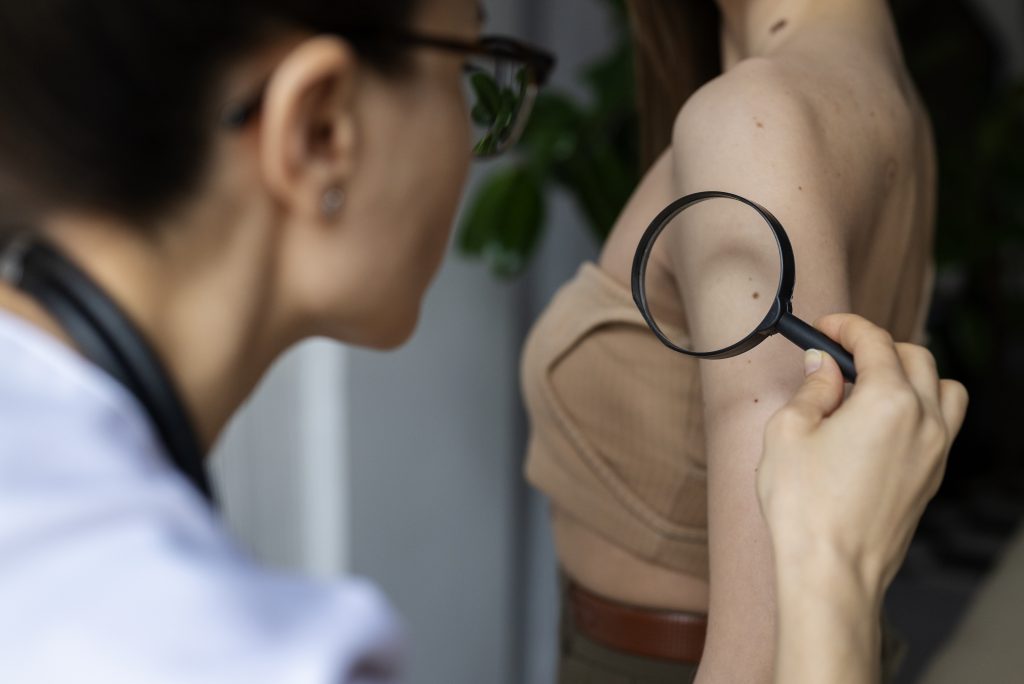
In the field of dermatology—particularly in skin cancers—the application of telemedicine is especially significant due to the visual nature of these diseases and the ability to record and transmit lesion images. Teledermatology, as a sub-branch of telemedicine, enables physicians to receive digital images of patients’ skin lesions and make diagnostic and therapeutic decisions based on them. This method plays a vital role in screening high-risk populations, following up patients after treatment, and even educating patients (Mostafaei, Sadeghi-Ghiyasi, Kabiri, Haj-Ebrahimi, 2021).
The development of information technology infrastructure and the widespread use of smartphones and high-speed internet in many countries have created a suitable opportunity for the application of telemedicine. On the other hand, the COVID-19 pandemic demonstrated that telemedicine can serve as an efficient tool when in-person visits are limited or pose risks. During this period, the extensive use of telemedicine allowed patients to continue their follow-up care without interruption and at the same time avoid exposure to infectious diseases in healthcare facilities.
This valuable experience has placed telemedicine more prominently at the center of attention for health policymakers and researchers.
Despite its many opportunities, the utilization of telemedicine for the screening and follow-up of patients with skin cancers also faces various challenges. One of the main challenges is the limitation of image quality and the equipment used. The diagnosis of malignant skin lesions requires high-resolution and highly accurate images, and any deficiency in image quality can lead to misdiagnosis or delays in treatment. In addition, the lack of unified protocols and standards for remote evaluation and patient follow-up has resulted in inconsistent outcomes and reduced reliability of this method.
Moreover, legal and ethical issues, such as maintaining the confidentiality of patient data, medical data ownership, and informed consent, are among the critical subjects that must be carefully addressed in telemedicine (Eisa-Zadeh, Pasand-Fatideh, 2019). The absence of comprehensive and transparent regulations in some countries can pose serious obstacles to the development of these services.
Additionally, limited access to high-speed internet and advanced equipment in underprivileged and rural areas is another challenge that may increase inequality in access to healthcare services.
Nevertheless, the opportunities ahead for telemedicine in the field of skin cancers are remarkable. Reduced healthcare costs, faster diagnosis, improved equity in access to medical services, and enhanced quality of patient follow-up are only part of the advantages of this innovative method. Ultimately, given the rising trend of skin cancer incidence and the importance of early detection, a comprehensive evaluation of the challenges and opportunities of telemedicine in this field is an undeniable necessity.
The present study aims to scientifically analyze these dimensions by reviewing existing research and evidence and offering strategies to improve the efficiency and effectiveness of telemedicine in the screening and follow-up of skin cancer patients.
Published in: Contemporary Research in Science and Studies Journal (Iran)
Publication Date: October 7, 2025 (16 Mehr 1404)
Author: Dr. Ellen Cameron