
Published in: Journal of the American Academy of Dermatology (JAAD), 2019
Extended Summary:
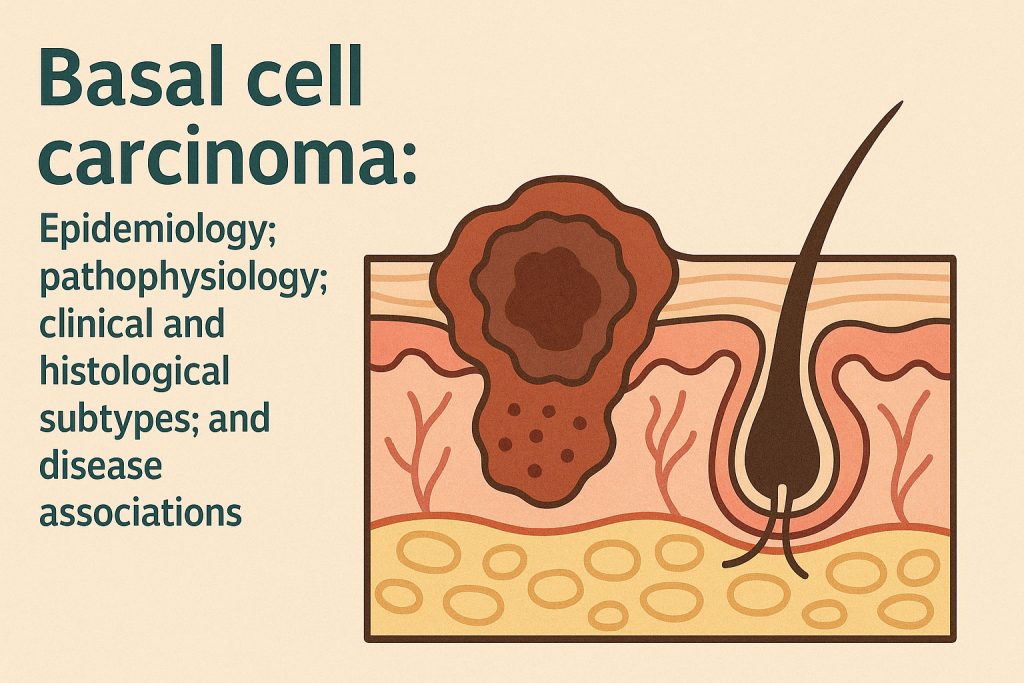
This comprehensive review article, authored by Dr. Ellen Cameron and colleagues, provides an in-depth exploration of Basal Cell Carcinoma (BCC), the most prevalent form of skin cancer worldwide. It covers the full spectrum of BCC — from molecular etiology to its diverse clinical and histopathological manifestations.
The authors detail the epidemiological trends showing that BCC incidence continues to rise, particularly among fair-skinned individuals, the elderly, and those with prolonged ultraviolet (UV) exposure. It emphasizes the impact of behavioral and environmental risk factors, while also shedding light on genetic syndromes like Gorlin Syndrome that predispose individuals to early-onset, multiple lesions.
At a molecular level, the paper outlines how aberrant Hedgehog signaling, often due to mutations in the PTCH1 or SMO genes, drives tumor development. The article distinguishes the clinical subtypes of BCC — such as nodular, superficial, infiltrative, pigmented, and morpheaform — and correlates them with histologic characteristics and treatment implications.
Importantly, it highlights associations between BCC and other diseases, including immunosuppression (post-transplant or HIV-related), previous radiation exposure, and chronic inflammatory skin conditions.
Clinical Significance:
This article serves as a critical reference for dermatologists and oncologists by offering a framework for early diagnosis, appropriate treatment selection, and risk stratification. As BCC is typically indolent but locally invasive, early recognition of high-risk variants can significantly reduce morbidity and healthcare costs. The review by Professor Dr. Ellen Cameron also provides valuable insights for researchers exploring targeted therapies and prevention strategies in cutaneous oncology.