
Introduction
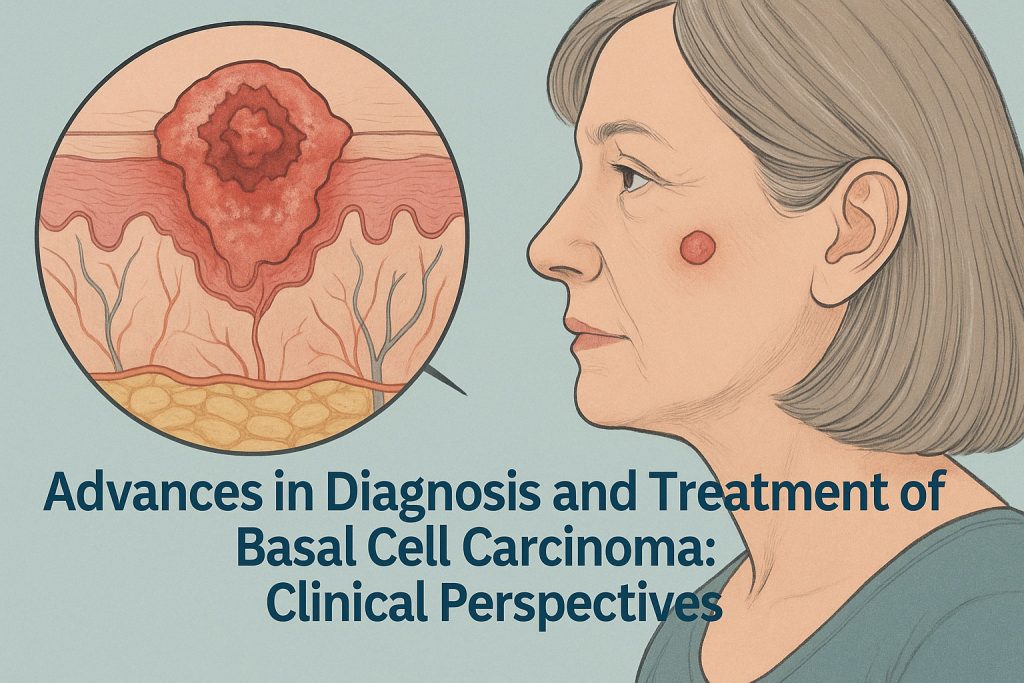
Basal cell carcinoma (BCC) is the most common type of skin cancer worldwide, accounting for approximately 80% of all non-melanoma skin cancers. It originates from the basal cells of the epidermis and typically exhibits slow, localized growth with rare metastasis. However, if left untreated, BCC can cause significant local tissue destruction and disfigurement, making early diagnosis and effective treatment essential.
Epidemiology and Risk Factors
The incidence of BCC is increasing globally, primarily due to increased exposure to ultraviolet (UV) radiation and aging populations. Key risk factors include:
• Chronic UV exposure, especially intermittent intense sun exposure
• Fair skin and a history of sunburns
• Immunosuppression (e.g., organ transplant recipients)
• Genetic syndromes such as Basal Cell Nevus Syndrome (Gorlin syndrome)
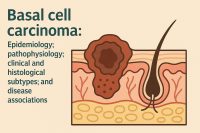
Pathophysiology and Molecular Mechanisms
The pathogenesis of BCC mainly involves dysregulation of the Hedgehog (Hh) signaling pathway. Mutations in the PTCH1 gene or activation of the SMO receptor lead to uncontrolled cellular proliferation. This pathway has become a therapeutic target with the emergence of Hedgehog inhibitors.
Clinical and Histological Subtypes
BCC presents in various clinical forms:
• Nodular BCC: The most common type, appearing as pearly papules with superficial blood vessels.
• Superficial BCC: Red, scaly patches mostly found on the trunk.
• Morpheaform (Sclerosing) BCC: Firm, scar-like lesions that are more aggressive and infiltrative.
• Pigmented BCC: Contains pigment and may be mistaken for melanoma.
Histologically, BCCs are classified based on cellular arrangement, stromal interaction, and invasion pattern, which are important for prognosis and treatment planning.
Diagnostic Strategies
Early diagnosis relies on clinical examination supported by dermoscopy, which reveals characteristic features such as arborizing vessels and blue-gray globules. Biopsy and histopathological examination confirm the diagnosis and subtype.
Treatment Modalities
Surgical Treatments
• Standard excisional surgery: Preferred for most BCCs, with margin assessment to ensure complete removal.
• Mohs micrographic surgery: The gold standard for high-risk or recurrent BCCs, enabling controlled tissue removal while conserving healthy tissue.
Non-Surgical Therapies
• Topical agents: Imiquimod and 5-fluorouracil for superficial BCCs.
• Photodynamic therapy: Effective for superficial and some nodular BCCs.
• Radiation therapy: An option for patients who are not surgical candidates.
Targeted Molecular Therapy
Hedgehog pathway inhibitors such as vismodegib and sonidegib have revolutionized treatment of advanced or inoperable BCC by blocking the activated pathway and reducing tumor size.
Clinical Experience and Recommendations
In my clinical practice, a multidisciplinary approach is essential. Treatment should be tailored based on tumor characteristics, overall patient condition, and cosmetic considerations. Patient education on UV protection and regular follow-up are critical to prevent recurrence and new lesions.
Conclusion
Basal cell carcinoma remains a significant challenge in dermatology despite its low mortality rate. Recent advances in molecular biology have expanded therapeutic options, especially for difficult cases. Ongoing research and meticulous clinical care are vital to improving patient outcomes.